Join Our
Email List
Home
Spotlight continued
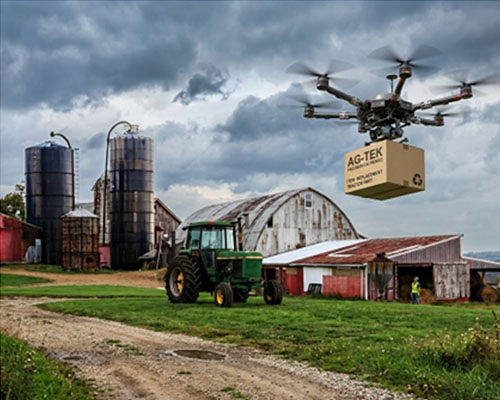 April 21, 2026Last-mile parcel delivery remains a major challenge in rural areas where unpaved roads, long travel distances, and sparse demand limit the efficiency of truck-based logistics. This research provides a practical, data-driven framework for statewide drone logistics planning and demonstrates how rural states can benefit from advanced air mobility solutions.
 December 22, 2025Efficient last-mile delivery remains a critical challenge for rural agricultural logistics, globally, particularly in cold-climate regions with dispersed agricultural operations. Truck–drone hybrids can reduce delivery times but face payload limits, cold-weather battery loss, and beyond-visual-line-of-sight regulations.