iPhone Technology May Help Improve ADA Compliance
Posted: Dec 1, 2025
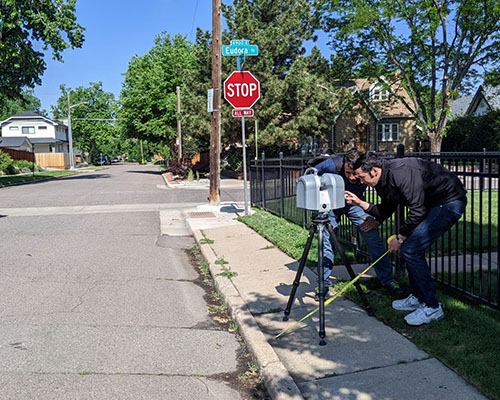 Researchers at the University of Colorado Denver found that mobile sensing capabilities found in newer iPhones can be a cost-effective way to assess if sidewalks, curb ramps, and other infrastructure are accessible to those with disabilities. Their research shows that mobile light detecting and ranging (LiDAR) technology, such as that in the iPhone Pro, can improve the efficiency and accuracy of assessing infrastructure for compliance with Americans with Disabilities Act regulations. LiDAR uses pulsed laser light to measure distances and create 3-D maps. They predict that its implementation can help municipalities streamline compliance checks, improving the accessibility of sidewalks and curb ramps for individuals with disabilities. By reducing the time and cost involved in data collection, cities can more rapidly address non-compliant infrastructure. Though obstructions can impact accuracy, using mobile LiDAR in unobstructed areas provides a practical solution, potentially leading to faster and more widespread improvements in accessibility for communities.
Wesley Marshall, Ph.D.
University of Colorado Denver
Pedestrian Infrastructure and ADA Compliance: Leveraging Advances in Spatial Technologies
MPC-24-563